
For many veterans, transitioning to civilian life comes with unique challenges—one of the most significant being the process of navigating the Department of Veterans’ Affairs (DVA) claims system. Whether applying for compensation for service-related injuries, accessing medical support, or seeking financial assistance, veterans often face a complex and bureaucratic process. It involves extensive paperwork, legal considerations, and medical evidence requirements, making it both overwhelming and time-consuming.
Unfortunately, many veterans struggle to complete their claims accurately or miss out on the full range of entitlements they’re eligible for. Errors, missing documentation, and misunderstandings of policy can result in delays or even rejections. Given how important these benefits are in ensuring veterans receive the care and support they deserve, seeking professional guidance is essential.
Key takeaways
- DVA advocates simplify the claims process, providing step-by-step support to reduce stress and avoid errors or delays.
- Veterans may be missing out on key entitlements, and advocates help identify the full range of benefits available based on service and medical history.
- Advocates provide access to trusted medical, legal, and psychological professionals, strengthening claims with credible, targeted evidence.
- Support goes beyond paperwork, with advocates offering long-term assistance, including appeals, rehabilitation, and wellbeing services.
Understanding the Role of a DVA Advocate
What is a DVA Advocate?
A DVA advocate is a specialist who supports veterans, current service members, and their families in preparing and lodging claims through the Department of Veterans’ Affairs. Advocates are trained to navigate the complexities of DVA policies and legislation, ensuring each claim meets eligibility criteria and is properly supported with the right documentation.
Unlike general legal representatives, DVA advocates focus exclusively on veteran issues. Many come from military backgrounds themselves, bringing both technical expertise and personal understanding to the role.
How Do Advocates Assist with DVA Claims?
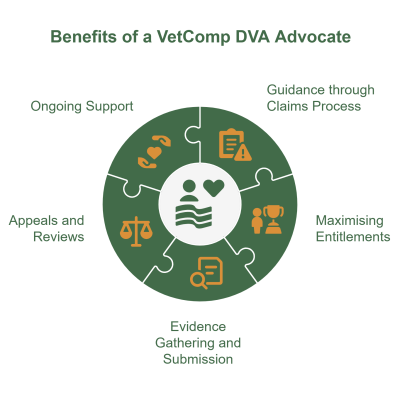
DVA advocates provide support in various ways, including:
- Guidance through the claims process – We ensure all required paperwork is completed correctly and submitted on time to avoid unnecessary delays.
- Maximising entitlements – We identify all possible benefits you are eligible for based on your service history, medical records, and circumstances.
- Evidence gathering and submission – We assist you in obtaining medical and psychological assessments to strengthen your claims, including linking you with veteran-friendly practitioners and practices.
- Appeals and reviews – We can advocate for you if a claim is denied or requires further review.
- Ongoing support – We keep you informed throughout the process, as we submit claims and do all the advocacy for you. We also offer post-claims support, to ensure you are linked in with all the services you need even after your compensation has been approved.
Key Benefits of Using an Advocate
1. Expert Guidance Through a Complex Process
The DVA claims process is often overwhelming for veterans, involving extensive paperwork, legal frameworks, and the need for detailed medical evidence. Understanding eligibility criteria, lodging the correct forms, and ensuring the right supporting documentation is provided can be confusing—particularly for those unfamiliar with government procedures.
VetComp DVA advocates are trained professionals who navigate this complex system on behalf of veterans, ensuring that every step is handled correctly. We help veterans gather the required evidence, submit properly completed claims, and meet strict deadlines, reducing the risk of delays and rejections due to administrative errors. By streamlining the process, our advocates remove much of the stress and uncertainty that veterans face when managing their claims alone.
2. Maximising Your Entitlements
One of the most significant advantages of working with an advocate is their ability to ensure veterans receive the full range of benefits they are entitled to. Many veterans unknowingly underreport their service-related conditions or fail to claim certain entitlements simply because they are unaware they qualify.
Advocates carefully review a veteran’s service history, medical records, and personal circumstances to identify all possible benefits. Whether it’s compensation for injuries, access to medical treatment, or financial support, they ensure that every aspect of a veteran’s service-related health and wellbeing is properly assessed. This thorough approach prevents veterans from missing out on valuable entitlements that could improve their quality of life.
3. Personalised Support and Understanding
A key strength of our advocates is their personal connection to the veteran community. Our advocates come from military backgrounds or other roles working alongside veterans, giving them a deep understanding of the unique experiences and challenges faced by veterans. This perspective builds trust and allows our advocates to approach claims with empathy, ensuring veterans feel understood and supported throughout the process.
Unlike dealing with a government agency, working with an advocate provides a personalised, one-on-one experience where veterans receive guidance tailored to their individual needs. Our advocates take the time to listen, explain complex policies in simple terms, and provide reassurance during what can be a stressful period.
4. Access to a Network of Resources
Successful DVA claims often require expert medical, legal, and psychological assessments to provide the necessary evidence. VetComp connects veterans with trusted professionals who specialise in military-related conditions, ensuring claims are backed by strong, credible documentation.
This network of resources includes:
- Doctors and specialists who can provide medical reports supporting service-related injuries.
- Psychologists and psychiatrists who can diagnose and document mental health conditions like PTSD, which may be critical to a claim.
- Financial advisors, once your compensation has been approved, will guide you towards the next step.
By leveraging these connections, advocates help veterans build stronger cases, improving their chances of a successful claim and promoting ongoing support even after the claims process.
5. Holistic Support for Wellbeing
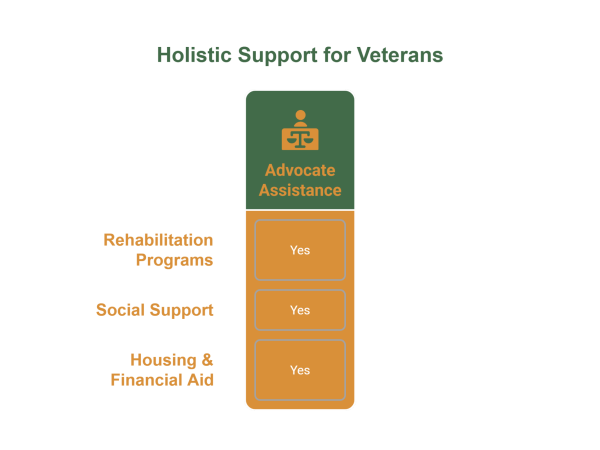
Our advocates do more than just help with paperwork—they take a holistic approach to veterans’ well-being. They often assist with:
- Rehabilitation programs to support physical and mental recovery.
- Social support networks to connect veterans with peers and support groups.
- Housing and financial assistance to ensure stability.
This broad level of support ensures that veterans not only receive compensation but also the services they need to thrive beyond their military service.
6. Representation in Appeals and Reviews
If a claim is denied or requires further review, our advocates provide critical representation in the appeals process. Many veterans find it intimidating to challenge a DVA decision, particularly when it involves legal hearings or tribunals.
Advocates help veterans understand their appeal rights and prepare the necessary documentation. They can also represent veterans before the Veterans’ Review Board (VRB) and the Administrative Appeals Tribunal (AAT), increasing the likelihood of a positive outcome. Their expertise in presenting compelling arguments and securing additional evidence can be the difference between a failed appeal and a successful claim.
7. Time-Saving and Efficient Process
Navigating a DVA claim alone can take months or even years, especially if errors lead to rejections and resubmissions. The time commitment and frustration involved in dealing with bureaucracy can be overwhelming.
Our advocates significantly reduce the time it takes to process claims by ensuring:
- Forms are completed correctly the first time, minimising back-and-forth delays.
- All necessary supporting evidence is submitted upfront, preventing unnecessary hold-ups.
- Deadlines are met, avoiding unintentional claim dismissals.
By expediting the process, advocates help veterans secure the benefits they need faster, reducing financial and emotional stress. VetComp’s current average completion date, from you joining us to your permanent impairment compensation being determined is just under 12 months!
Securing the Support You Deserve
Lodging a DVA claim can be a daunting and complicated process, but veterans don’t have to navigate it alone. Using a VetComp advocate provides expert guidance, maximises entitlements, and ensures claims are handled efficiently. With personalised support and access to professional networks, there’s every reason for veterans to seek assistance.
Beyond securing compensation, our advocates connect veterans with broader support services—from rehabilitation programs to employment assistance—ensuring they receive the full range of benefits they deserve. For veterans facing appeals, advocates provide representation that can greatly improve their chances of success.
If you’re a veteran or know someone who could benefit from advocacy services, consider reaching out to our team because we would love to have a chat and see how we can best support you with your claims.
Seeking help isn’t just about lodging a claim—it’s about securing the support and recognition every veteran deserves for a better future.
FAQs
We’ve gathered our most commonly asked questions here, so you can feel informed, at ease, and ready to take the next step toward the support and benefits you deserve.
Can a DVA advocate help if I’ve already submitted a claim on my own?
Absolutely. If you’ve lodged a claim but are facing delays, confusion, or a rejection, our advocates can step in to review your existing application, gather missing evidence, and assist with appeals or revisions. You’re not alone, even after submission.
What kinds of conditions can I claim compensation for?
You may be eligible for compensation for a wide range of service-related physical injuries and mental health conditions, including musculoskeletal issues, hearing loss, PTSD, anxiety, and more. An advocate can help you identify any conditions that may be linked to your service—even those you might not realise are eligible.
How long does the DVA claims process usually take?
Timeframes vary depending on the complexity of your case, but VetComp’s average processing time—from when you join us to when your permanent impairment compensation is determined—is just under 12 months. With an advocate’s help, you can avoid unnecessary delays and keep things moving.
Do I need to gather my own medical records or evidence before contacting an advocate?
Not at all. One of the key roles of a DVA advocate is to help you gather the necessary medical, psychological, and service-related documentation. We’ll guide you through what’s needed and connect you with veteran-aware health professionals if further assessments are required.
What happens if my claim is rejected—do I still have options?
Yes, a rejected claim is not the end of the road. Our advocates assist with preparing appeals, submitting supporting evidence, and even representing you before review boards or tribunals. Many veterans succeed in their appeals with the right support.
Can advocates help with more than just compensation claims?
Yes—our support goes far beyond compensation. We help connect you with services for rehabilitation, housing support, peer networks, mental health resources, and even financial planning after your claim is successful. It’s about building a better life beyond the paperwork.